
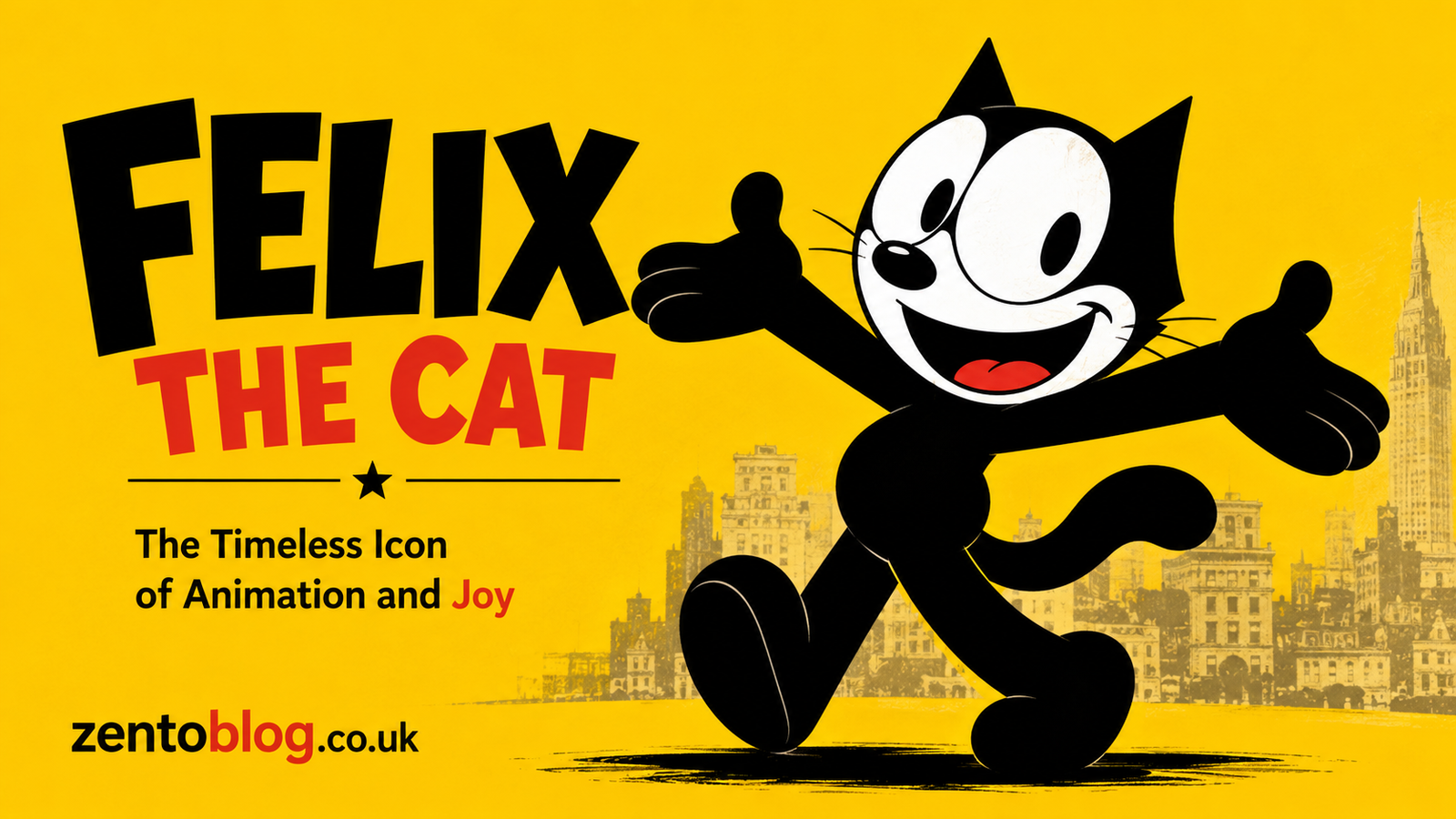
Felix the Cat: History, Origins, and Lasting Legacy
Felix the Cat is one of the most recognizable cartoon characters in entertainment history. Long before modern animated icons appeared on television and streaming platforms, Felix delighted audiences with clever adventures, expressive movements, and imaginative storytelling during the silent film era.
Despite being created more than a century ago, Felix remains an enduring symbol of early animation. His influence extends beyond cartoons, inspiring artists, animators, filmmakers, and pop culture enthusiasts around the world. From groundbreaking silent shorts to comic strips, merchandise, and television revivals, Felix has successfully adapted to changing generations while preserving his timeless charm.
This article explores the complete history of Felix the Cat, including his origins, creators, rise to fame, cultural significance, and why he continues to hold an important place in animation history.
Key Takeaways
- Felix the Cat is one of the earliest and most influential animated characters.
- The character first appeared during the silent film era in 1919.
- Felix became an international pop culture icon before Mickey Mouse was introduced.
- His creative adventures helped shape modern animation techniques and storytelling.
- Felix continues to inspire audiences through comics, television, collectibles, and popular culture.
Main Article
The Origins of Felix the Cat
Felix the Cat made his first appearance in 1919 during a period when animation was still in its infancy. His debut is generally associated with the short film Feline Follies, produced by the Pat Sullivan Studio.
The creation of Felix has long been the subject of debate. While producer Pat Sullivan claimed ownership of the character, many animation historians credit lead animator Otto Messmer with designing Felix’s appearance, personality, and much of the animation that made him famous.
Regardless of the exact authorship, Felix quickly became one of the world’s first internationally successful animated stars.
Why Felix the Cat Was Revolutionary
Today, audiences are accustomed to colorful, fast-paced animation with dialogue and sound effects. Felix succeeded under far more limited conditions.
During the silent film era, he relied entirely on:
- Expressive body language
- Creative visual storytelling
- Physical comedy
- Clever problem-solving
- Imaginative transformations
Without speaking a single word, Felix could communicate emotion, humor, curiosity, and determination through movement alone.
This level of visual storytelling became a foundation for later animated productions.
The Character Design
Felix’s simple design played a major role in his success.
His appearance includes:
| Feature | Description |
|---|---|
| Body | Black cartoon cat |
| Eyes | Large white eyes |
| Face | Highly expressive |
| Tail | Flexible and often part of visual gags |
| Personality | Clever, optimistic, adventurous |
The bold black-and-white design worked perfectly for early film technology, making Felix instantly recognizable even on primitive cinema screens.
The Golden Age of Felix the Cat
Throughout the 1920s, Felix became one of the biggest entertainment stars in the world.
His cartoons were distributed internationally and enjoyed by audiences of all ages.
Popular themes included:
- Magical adventures
- Inventive problem solving
- Fantasy worlds
- Everyday challenges
- Comic misunderstandings
Unlike many later cartoon heroes, Felix often solved problems by creatively using objects around him. His famous tail could become a tool, ladder, fishing rod, or almost anything his imagination required.
This inventive storytelling became one of the character’s defining traits.
Felix Before the Age of Sound
One of Felix’s greatest achievements was becoming famous without spoken dialogue.
Because silent films relied entirely on visuals, Felix’s adventures could be understood regardless of language.
This made him especially popular around the world.
Audiences from different countries could enjoy the same stories without translation, making Felix one of animation’s first truly global characters.
The Arrival of Sound Animation
The late 1920s changed animation forever.
When synchronized sound became popular, audiences quickly embraced talking cartoons.
Characters like Mickey Mouse benefited from this technological shift, particularly after the success of Steamboat Willie in 1928.
Felix’s transition to sound proved difficult.
Several factors contributed:
- Delayed adoption of sound technology
- Increasing competition
- Changing audience preferences
- Rapid advances in animation techniques
Although Felix remained recognizable, his popularity gradually declined during this period.
Television Revived Felix
Felix experienced a major comeback during the late 1950s.
Television introduced the character to an entirely new generation through animated series that featured colorful adventures and memorable supporting characters.
One of the most famous additions was the:
Magic Bag of Tricks
The Magic Bag of Tricks became Felix’s signature accessory.
It could produce almost anything needed to solve problems, making stories even more imaginative and entertaining.
This addition helped modernize the character while preserving his original creativity.
Felix the Cat in Comics
Felix’s popularity extended beyond animated films.
The character appeared in:
- Newspaper comic strips
- Comic books
- Children’s publications
- International magazines
Comic artists expanded Felix’s adventures while maintaining his playful personality.
These publications introduced him to readers who may never have seen his original silent cartoons.
Merchandise and Popular Culture
Few early cartoon characters achieved the merchandising success of Felix.
Over the decades, his image has appeared on:
- Toys
- Clothing
- Lunch boxes
- Watches
- Posters
- Collectible figurines
- School supplies
- Home décor
Collectors continue to value vintage Felix merchandise, particularly items produced during the 1920s and 1930s.
Cultural Impact
Felix the Cat occupies an important place in animation history because he helped establish many storytelling techniques still used today.
His influence can be seen in:
- Character-driven comedy
- Visual humor
- Physical animation
- Cartoon symbolism
- Creative fantasy storytelling
Many animation historians consider Felix one of the first characters to demonstrate that cartoons could carry ongoing personalities rather than appearing as simple visual experiments.
Felix Compared with Other Classic Cartoon Characters
| Character | First Appearance | Known For |
|---|---|---|
| Felix the Cat | 1919 | Silent-era animation pioneer |
| Mickey Mouse | 1928 | Sound cartoons and Disney mascot |
| Betty Boop | 1930 | Jazz Age animation |
| Popeye | 1933 (animated debut) | Comedy and strength |
| Bugs Bunny | 1940 | Smart humor and catchphrases |
Felix stands apart because he helped define animation before synchronized sound became standard.
Why Felix Still Matters Today
Modern audiences continue discovering Felix through:
- Streaming collections
- Animation history documentaries
- Museum exhibitions
- Comic reprints
- Retro merchandise
- Classic cartoon festivals
His adventures remain enjoyable because they emphasize creativity, humor, and imagination rather than dialogue or complex special effects.
Influence on the Animation Industry
Felix demonstrated that animated characters could become lasting entertainment brands.
His success encouraged studios to invest in:
- Character development
- Serialized cartoons
- International distribution
- Licensing
- Merchandise
- Brand recognition
Many practices now considered standard in the animation business can trace their roots to the commercial success of Felix and other early cartoon stars.
Interesting Facts About Felix the Cat
- Felix first appeared in 1919.
- He became one of the world’s first animated celebrities.
- Most early Felix cartoons were silent films.
- Otto Messmer is widely recognized for shaping Felix’s design and personality.
- Felix’s expressive animation influenced generations of cartoon artists.
- The Magic Bag of Tricks became one of the character’s most iconic features during later television adaptations.
- Vintage Felix collectibles remain highly sought after by collectors worldwide.
The Lasting Legacy of Felix the Cat
More than a century after his debut, Felix the Cat remains one of animation’s greatest pioneers.
His influence extends far beyond nostalgia.
He helped establish many of the creative principles that continue to define animated storytelling, including expressive character animation, visual comedy, and imaginative world-building.
Whether viewed as a historical milestone, a beloved childhood character, or a symbol of early filmmaking innovation, Felix continues to occupy a unique place in popular culture.
Frequently Asked Questions
1. Who created Felix the Cat?
Felix the Cat was produced by the Pat Sullivan Studio. While Pat Sullivan claimed ownership, many historians credit animator Otto Messmer with creating the character’s design, personality, and many of the original cartoons.
2. When did Felix the Cat first appear?
Felix the Cat first appeared in 1919 in the silent animated short Feline Follies.
3. Why is Felix the Cat important?
Felix is considered one of the earliest successful animated characters and played a significant role in shaping modern animation through visual storytelling and expressive character animation.
4. What is Felix the Cat’s Magic Bag of Tricks?
The Magic Bag of Tricks is a magical bag introduced in later television adaptations that can produce almost any object Felix needs during his adventures.
5. Was Felix the Cat popular before Mickey Mouse?
Yes. During the 1920s, Felix was one of the world’s most famous cartoon characters and achieved international popularity before Mickey Mouse debuted.
6. Why did Felix the Cat lose popularity?
Felix struggled during the industry’s transition to synchronized sound, while newer animated characters embraced evolving technology and changing audience expectations.
7. Is Felix the Cat still popular today?
Yes. Although no longer as dominant as in the 1920s, Felix remains a respected animation icon with enduring popularity among collectors, historians, and classic cartoon fans.
Conclusion
Felix the Cat is much more than an early cartoon character—he is a cornerstone of animation history. His innovative visual storytelling, memorable personality, and worldwide appeal helped establish many of the conventions that continue to shape animated entertainment today.
From silent films and comic strips to television revivals and collectible merchandise, Felix has demonstrated remarkable staying power across generations. While animation has evolved dramatically since his debut in 1919, the creativity, charm, and imagination that made Felix famous remain just as engaging today. For anyone interested in the origins of animation or the evolution of iconic cartoon characters, Felix the Cat stands as an enduring example of timeless storytelling and artistic innovation.